
How to Search Bolivar County Court Records
Searching here is venue-specific. No county-branded portal covers Circuit, County, Chancery, Justice, and Municipal cases in one place. The working method is simple. Find the court level. Find the judicial district. Then use the right online system or clerk counter. Mississippi splits trial work across tracks, so the subject of the case decides which court holds the file.
Before you start, gather the basics. Know the full party name. Note the rough filing year. Decide if the matter is felony, civil, family, traffic, or a city charge. That tells you whether to look at Circuit, County, Chancery, Justice, or Municipal Court. The state judiciary explains how those courts divide their work.
The Mississippi Judiciary court-structure overview lays out which trial court hears which kind of case.
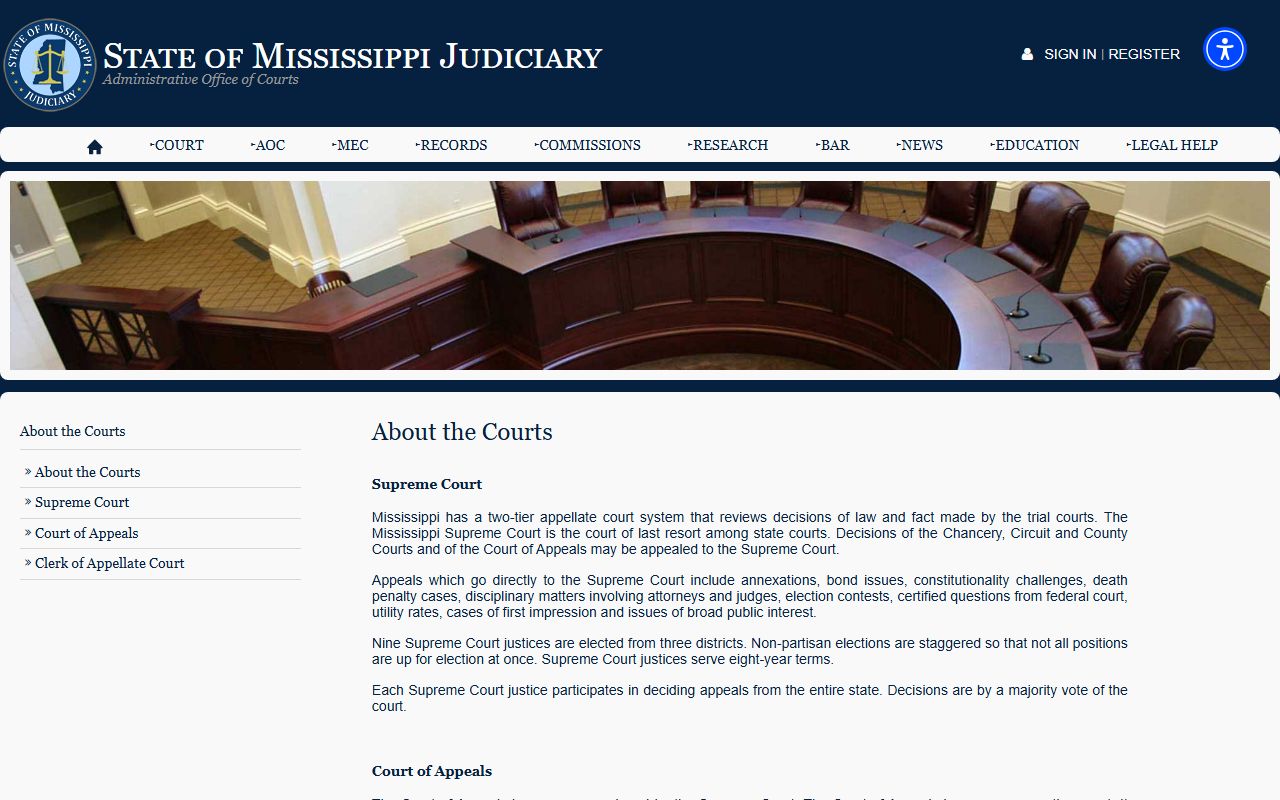
That overview helps you sort a Bolivar County matter before you ever pick up the phone or open a search screen.
- Identify the court level. Circuit Court hears felonies, large civil suits, and appeals from lower courts. Chancery Court handles divorce, custody, probate, and land equity. County Court covers smaller civil, juvenile, and unlawful-entry matters. Justice and Municipal Courts take traffic, misdemeanors, and city ordinance cases.
- Identify the district. Bolivar County has two. The First Judicial District sits at 801 Main Street in Rosedale. The Second Judicial District sits at 200 South Court Street in Cleveland.
- Use MEC or PAMEC where it applies. Mississippi Electronic Courts holds Chancery, Circuit, and County case files. Public Access to MEC, called PAMEC, is account based and needs registration.
- Fall back to the clerk. Call or visit the Circuit Clerk for Circuit, County, and Youth cases. Visit the Chancery Clerk for divorce, probate, and land files, which are not online.
- Use the payment portals for fines. The Circuit Clerk page directs users to pick District 1 or District 2 and pay by case or citation.
Justice Court records sit at 404 N Martin Luther King Jr. Drive in Cleveland, reachable at 662-843-4008. Cleveland Municipal Court records sit at 315 S. Sharpe Street, reachable at 662-843-7346. Neither posts a public online case search, so contact comes first.
Bolivar County Court Records Search Fields
Mississippi Electronic Courts is the statewide filing and case-management system for Chancery, Circuit, and County Courts. The public access path, PAMEC, sits behind a login. The Eleventh Circuit Court District page does show court locations and case flags without an account, but it does not expose a free, open case-search form. To run a real search and pull documents, you register for PAMEC first.
The fields below come from the public MEC pages for the Eleventh Circuit, which includes Bolivar County. They show what controls the search context and where to get help when registration questions come up.
| Field Label | Type | Required | Notes / Format |
|---|---|---|---|
| Court | Court selection | Yes in PAMEC | Eleventh Circuit District; Bolivar Circuit Court First or Second; Bolivar County Court First or Second. |
| Login / Registration | Account | Yes for search | PAMEC registration and login required before search and document access. |
| PAMEC Contact | Support | No | P.O. Box 117, Jackson, MS 39205; phone 601-576-4650; email helpdesk@mec.ms.gov. |
| Public Court-Info Flags | Status code list | No | APPEAL, Bench Warrant Issued, CLOSED, EXPUNGED, SEALED, Trial Pending, Plea Pending, Probation. |
Note: The open Eleventh Circuit page lists court locations and status flags only, so a full Bolivar County case search needs a registered PAMEC account.
Types of Bolivar County Court Records
Each court produces its own kind of record. Circuit Court keeps civil suits and felony files. A civil file holds complaints, answers, motions, summonses, subpoenas, judgments, and docket entries. A felony file holds indictments, bond orders, pleas, verdicts, and sentencing orders. County Court records cover eminent domain, partition, unlawful entry and detainer, youth matters, and cases shared with Justice Court.
Chancery Court records run to family and equity work. Those files include divorce, child custody and support, land disputes, injunctions, and contempt actions. Probate files sit here too, with wills, estate administrations, guardianships, and conservatorships. The Circuit Court track and the Chancery Court track are entirely separate, and the state judiciary describes the felony and civil reach of the higher trial court.
The Mississippi Judiciary Circuit Court overview sets out its felony, civil, and appellate jurisdiction.
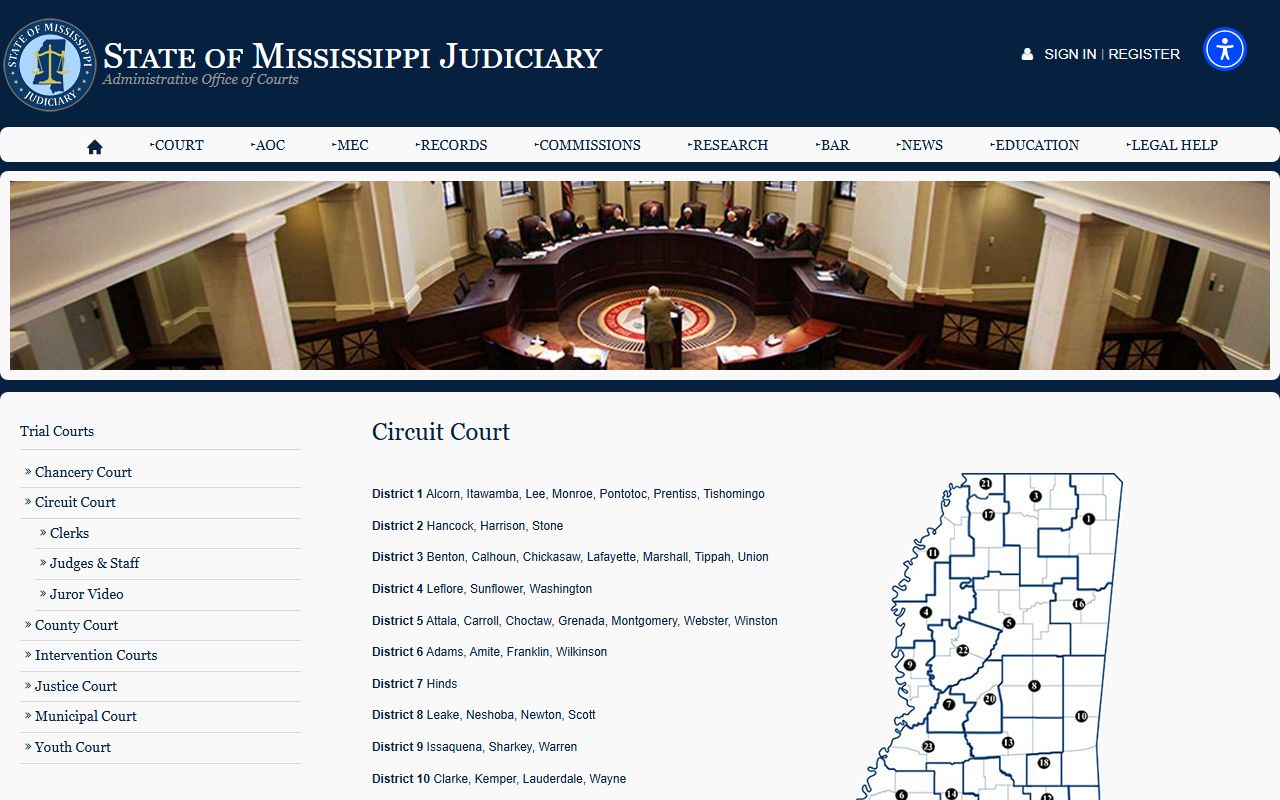
That page confirms why most major Bolivar County criminal and civil court records start in Circuit Court.
- Civil Circuit records: lawsuits, motions, judgments, and appeal records from lower courts.
- Criminal Circuit records: indictments, pleas, trial settings, verdicts, and sentencing.
- County Court records: youth matters, partition, and unlawful entry and detainer.
- Chancery records: divorce, custody, probate, guardianship, and land equity.
- Traffic and city records: tickets and ordinance cases in Justice or Municipal Court.
Many docket entries from these files feed the public hearing calendars covered on the Bolivar County court dockets page.
Which Bolivar County Courts Hold the Records
The Chancery Clerk is the access point for a large share of family and property records. The county states plainly that Chancery Court files are public unless sealed by the Chancellor. It also states that adoptions and mental-health files are sealed unless the Chancellor orders otherwise. Most important for searchers, the county says Chancery Court files are not computerized or accessible by internet. That makes the clerk counter the real channel for divorce, probate, custody, and land-equity files.
The Mississippi Judiciary Chancery Court overview describes that court's equity, divorce, and probate jurisdiction.
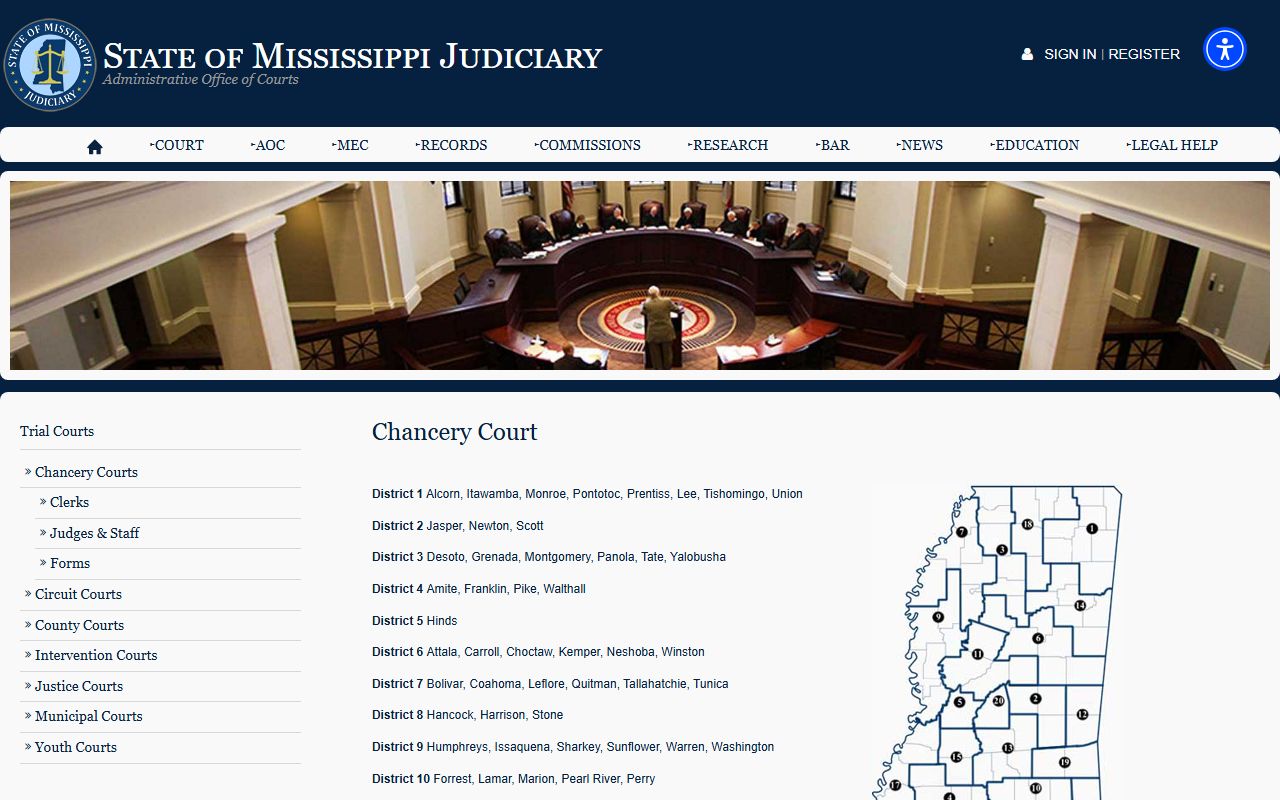
It confirms that the records a researcher cannot find online are exactly the ones held at the Chancery Clerk's office.
Lower courts handle the high-volume, smaller cases. Justice Court takes lower civil claims, misdemeanors, traffic, and eviction matters. Its clerk and judges work from 404 N Martin Luther King Jr. Drive in Cleveland. The state judiciary explains the justice-court role and its judges.
The Mississippi Judiciary Justice Court overview covers the kinds of cases this court hears.
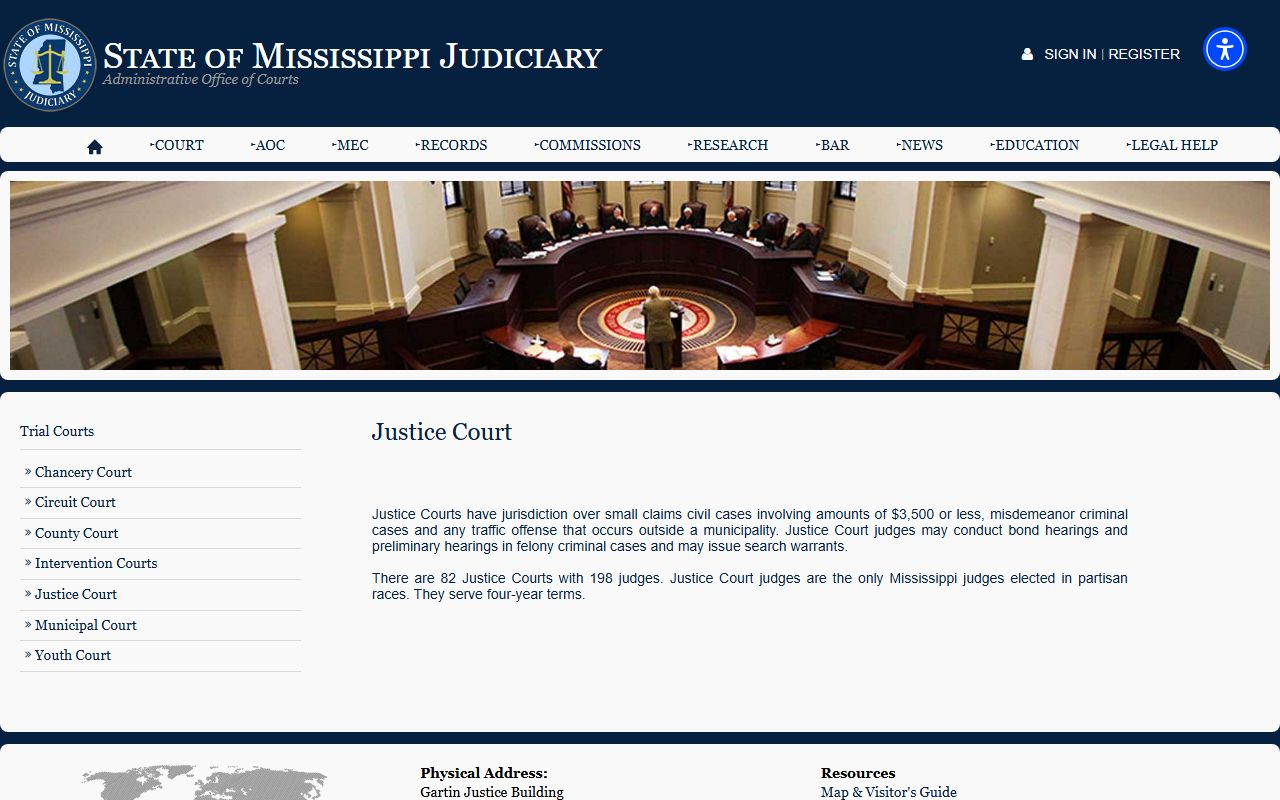
For a Bolivar County ticket or small claim, Justice Court is often the first place to check.
City charges follow a different track. Cleveland Municipal Court hears city misdemeanors, ordinance violations, and city traffic citations from 315 S. Sharpe Street. Whether a ticket lands in Justice Court or Municipal Court depends on which agency wrote it and whether the violation is state, county, or city.
The Mississippi Judiciary Municipal Court overview sets out its reach over city offenses and traffic.
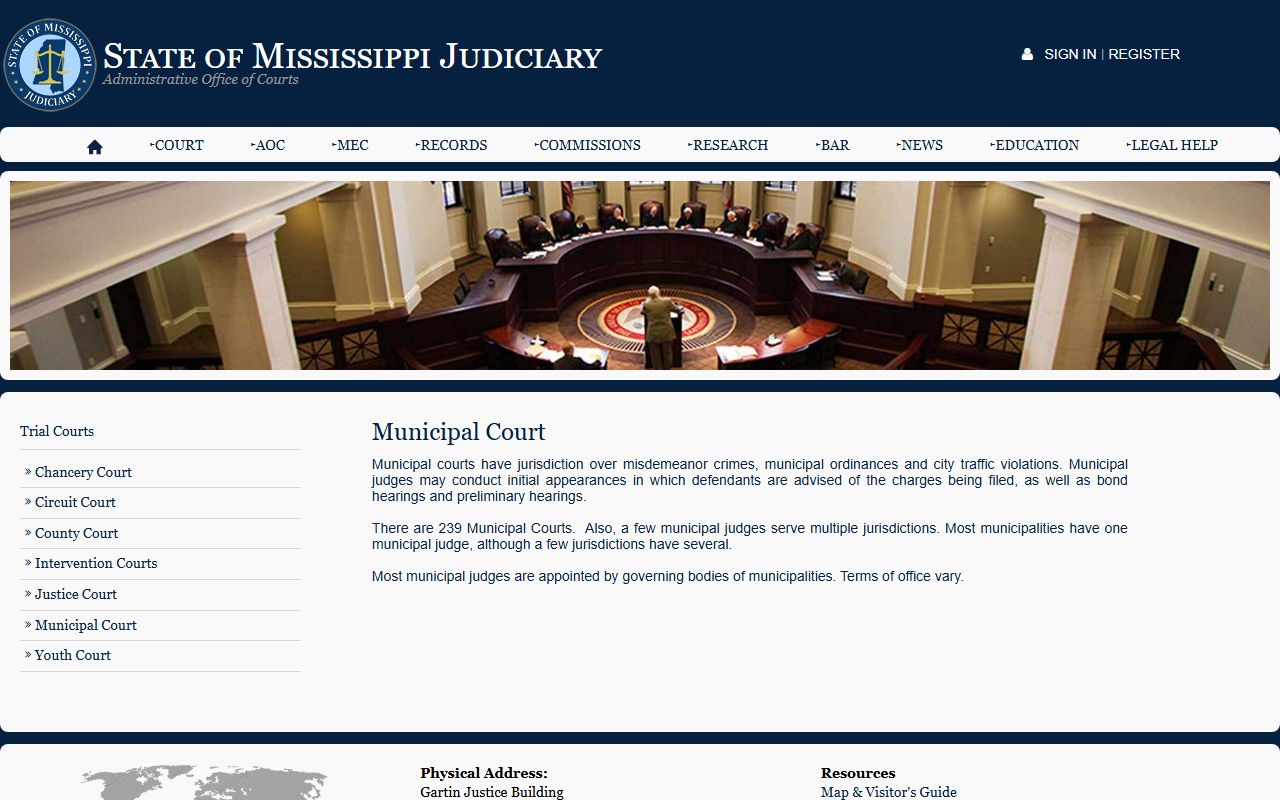
That distinction tells a searcher whether to call the city court or the county Justice Court for a given citation.
What Bolivar County Court Records Show
A case file is built from many parts. Some appear on a public docket. Others sit inside the documents themselves. The table below lists the fields a Bolivar County case record is expected to carry, drawn from how the courts and MEC organize a file. The exact public format for a given case can vary by court level and by whether the file is digitized.
| Field | What It Shows |
|---|---|
| Case Number | The identifier the filing court or MEC assigns to the case. |
| Court and District | Circuit, County, Chancery, Justice, or Municipal, in the First or Second District. |
| Filing Date | The date the case was opened. |
| Parties | Plaintiff and defendant, state and defendant, petitioner and respondent, or estate and decedent. |
| Attorneys | Counsel of record; bar numbers may appear on MEC filings. |
| Judge | The assigned judge or chancellor. |
| Docket Entries | Filings, motions, orders, hearings, continuances, judgments, and pleas. |
| Documents | Pleadings, orders, judgments, summonses, decrees, and sentencing orders. |
| Financial Section | Fees, fines, court costs, restitution, bonds, and assessments. |
| Status | Open, closed, sealed, expunged, stayed, trial pending, or warrant issued. |
Some terms repeat across files and trip up first-time searchers. A motion is a written request to the judge. A disposition is the outcome of a case or charge. Nolle prosequi means the prosecutor chose not to proceed. A capias is a warrant-like order to take a person into custody. A bench warrant is one a judge issues, often after a missed court date. Knowing these labels makes a docket far easier to read.
Public Access Laws for Bolivar County Court Records
Mississippi treats public records as open unless a statute, court rule, or judge's order says otherwise. The governing law is the Mississippi Public Records Act, found at Title 25, Chapter 61 of the Mississippi Code. Under it, records held by public bodies are generally available for inspection. Court files follow that rule, though the correct custodian still matters for each kind of case.
Two related sections shape how a request plays out. Section 25-61-7 lets agencies charge lawful costs for searching, reviewing, copying, and mailing records. Section 25-61-11 protects records that another law, a court order, or a privilege already makes confidential, so a request alone does not force them open. The state ethics commission hosts the full act.
The Mississippi Ethics Commission Public Records Act page sets out the statute and its exemptions in full.
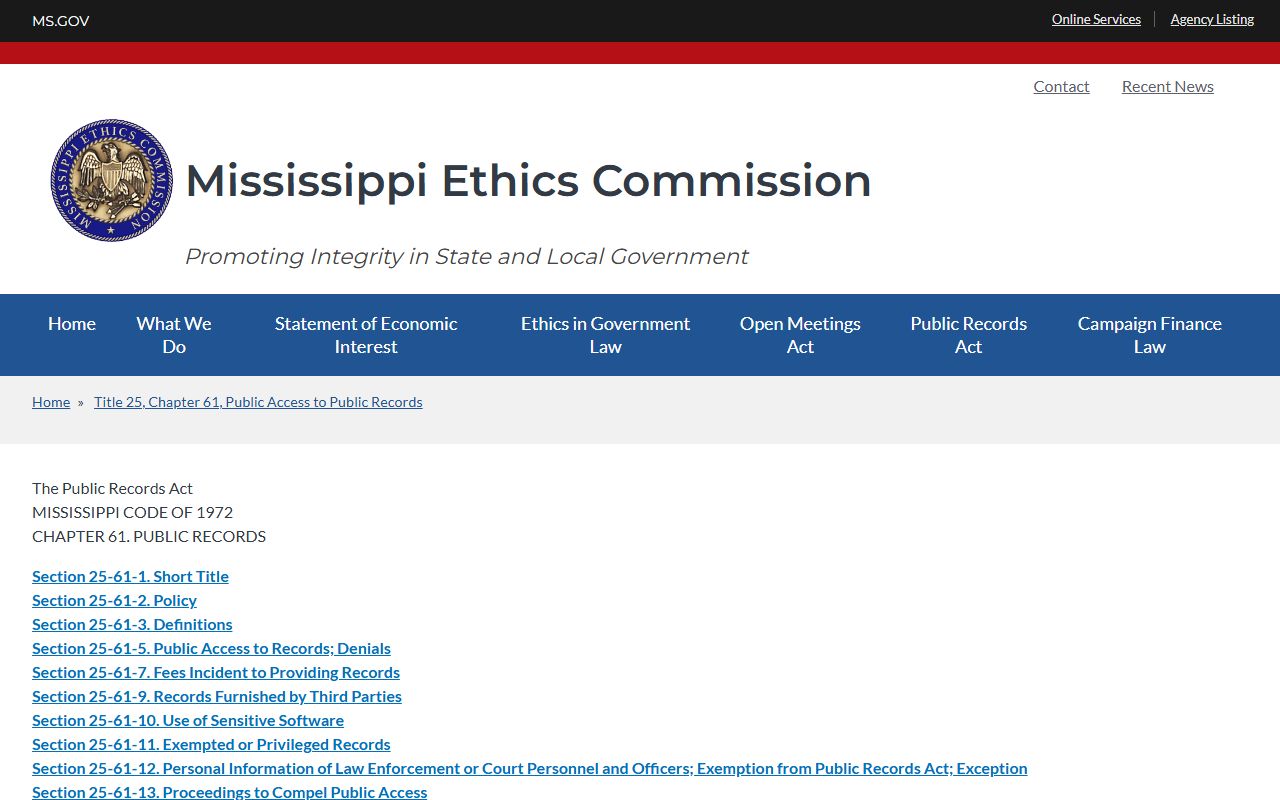
That page is the source to check before filing a written request for older or non-digitized Bolivar County files.
Note: Circuit and County records go through the Circuit Clerk, while Chancery records go through the Chancery Clerk, so always match the request to the custodian.
Sealed and Confidential Bolivar County Records
Not every file is open. Youth and juvenile court records are generally confidential, and the County Court judge also serves as Youth Court judge. Adoption files are sealed unless the Chancellor orders access. Mental-health and alcohol or drug commitment files are sealed the same way. Expunged cases carry an EXPUNGED flag in MEC and should not show up as ordinary convictions. Sealed files carry a SEALED flag. Public copies may also redact Social Security numbers, financial accounts, and details about minors.
Clearing a record runs through the court that handled the case. The Eleventh Circuit District Attorney explains that Mississippi law, under Section 99-19-71, allows expunging one conviction from public records five years after a person completes every term of the sentence, subject to disqualifying offenses. Non-conviction outcomes, dismissals, and acquittals may follow other paths. The process starts by identifying the right court, pulling the docket and disposition, and filing the petition the statute requires.
Note: Adoption and mental-health files in Bolivar County stay sealed unless the Chancellor orders otherwise, so they are not part of a routine public search.
In-Person, Phone, and Mail Requests
When a file is older, non-digitized, or simply not online, the clerk counter is the answer. The Circuit Clerk holds Circuit, County, Youth, marriage, judgment, and process records and acts as custodian for court and marriage records across both districts. Ask whether the case is in MEC, whether documents can be inspected at the counter, and what copy or certification fees apply. Chancery copies run $0.50 per copy under the county fee schedule.
Use the district office that holds the case. Both Circuit Clerk locations keep 8 a.m. to 5 p.m. weekday hours.
Circuit Clerk, First Judicial District
801 Main Street
Rosedale, MS 38769
662-759-6521
Mon-Fri 8:00 a.m. to 5:00 p.m.
Circuit Clerk, Second Judicial District
200 South Court Street, P.O. Box 670
Cleveland, MS 38732
662-843-2061
Mon-Fri 8:00 a.m. to 5:00 p.m.
If the district is unclear, the county main lines can route a call. Rosedale answers at 662-759-3762 and Cleveland at 662-846-5877. For Chancery matters, the Chancery Clerk works from P.O. Box 238 in Rosedale at 662-759-3762 and P.O. Box 789 in Cleveland at 662-843-2071. Mail requests work well for certified copies and for files that the online systems do not reach. A short written request that names the parties, the rough filing year, and the court level gives the clerk enough to find the file.